Japanese Kouso Enzyme Supplements: What They Really Are and How to Choose
12 November 2026 · 9 min read
On Japanese labels, "kouso" rarely means a digestive enzyme. We break down the ingredients, daily amounts and cost per day using real catalog products.
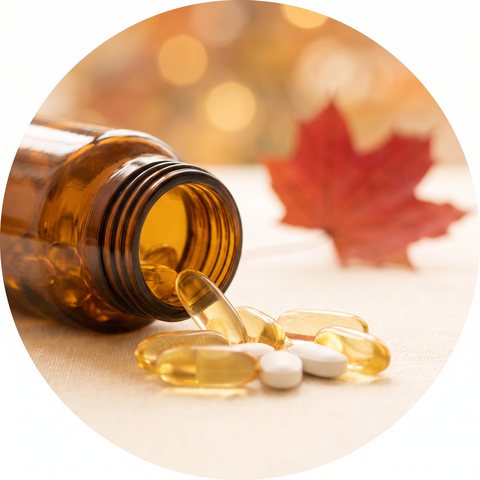
If a Japanese supplement label says "kouso" or "nama koso," it almost never means a pharmacy style digestive enzyme capsule. In most cases it means a fermented plant extract: a concentrate made by fermenting and aging a blend of vegetables, fruits and herbs, often combined with other active ingredients. This guide explains what "kouso" actually refers to, how to read the label, and what it costs per day, using real products from the Eurasia Japan catalog.
What "kouso" actually means
The Japanese word kouso (酵素) literally translates as "enzyme." Because of that, many shoppers from the US or Europe expect these products to work like a Western digestive enzyme supplement: a capsule with papain, bromelain or amylase, taken with meals. In practice, products labeled "kouso" are built differently.
Instead of a single named enzyme, the ingredient list usually starts with something close to "plant fermentation extract" (植物発酵エキス). This is a concentrate made by fermenting and aging a blend of vegetables, fruits and herbs, sometimes with grains or seaweed, often with the help of yeast or lactic acid bacteria. Per the maker, the Infinity Premium Nama Koso line uses a fermentation extract of 230 kinds of plants, while the Minami Healthy Foods formula lists 245 kinds of vegetables, fruits, seaweed and mushrooms. This is not a purified enzyme with a measurable activity rating; it is a plant concentrate in which fermentation is the process used to produce the raw material.
So "kouso" is best understood not as a Japanese equivalent of a pharmacy enzyme supplement, but as its own category: fermented plant concentrates added to the diet, often paired with other ingredients such as coenzyme Q10, L-carnitine or probiotics. Brands position these as everyday diet-supporting products, not as treatments.
How kouso differs from Western "enzyme" supplements
Three practical differences are worth knowing before you buy:
- The formula is measured in "kinds of plants," not activity units. You will not see numbers like "5000 FCC" or "HUT" the way you would on a Western digestive enzyme label. Instead, the maker states how many kinds of raw material went into the fermentation extract: 200, 230, 245 and so on.
- The formula is usually a blend. Beyond the fermentation extract itself, the capsule or sachet often also contains coenzyme Q10, L-carnitine, a vinegar concentrate (for example Shanxi aged vinegar or Zhenjiang aromatic vinegar), a named lactic acid bacteria strain (such as EC-12), or a botanical extract like candle bush. These need to be read as separate ingredients, not as part of "the enzymes."
- The format varies. Soft capsules, tablets, and drinkable sachets mixed with water are all common. The daily amount and how many days a pack lasts are stated in the "usage" section of the label, and that is where you should look for the real length of a course, not the product name.
How to read a kouso supplement label
When comparing kouso products, check four parts of the label.
- The first ingredient. "Plant fermentation extract" or "fermented plant extract" is the base of the formula. The earlier it appears, the larger its share (ingredients are listed in descending order by weight).
- The number of plant types. Makers usually state this in the description: 200, 230 or 245 kinds of plants. It is a marketing figure, but a checkable one.
- Supporting active ingredients. Coenzyme Q10, L-carnitine, a named bacteria strain, candle bush extract and similar additions should be read separately from the fermentation extract, since each has its own daily amount.
- Allergens. Japanese labels list contained allergens directly: wheat, soy, apple, kiwi, peach, yam and others, which matters if you are avoiding overlapping ingredients across several supplements.
If Japanese supplement labels are new to you in general, there is a separate guide on the blog: how to read Japanese supplement labels.
Daily amount and how long a pack lasts
The daily amount is almost always small, 1 to 4 capsules or tablets a day, but how long a pack lasts varies a lot by pack size. Figures below are drawn from the "usage" section on each product's label.
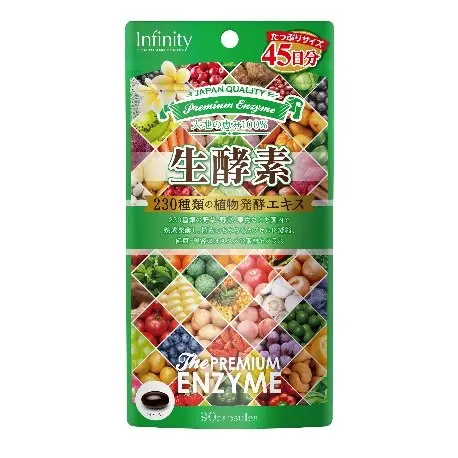
- Per the maker, Infinity Premium Nama Koso Raw Enzyme (90 capsules) is taken at 2 capsules a day, and the pack lasts 45 days.
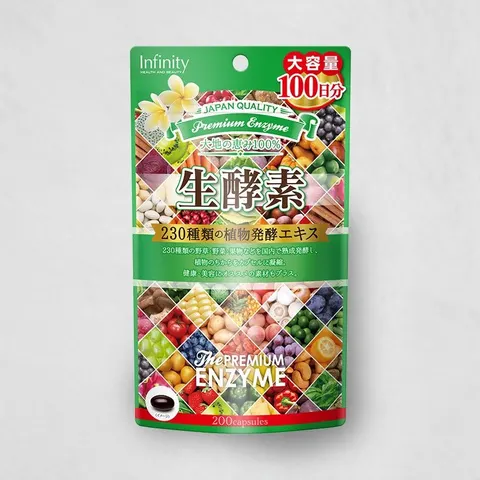
- Per the maker, the large pack of Infinity Premium Nama Koso Raw Enzyme (200 capsules) uses the same 2 capsules a day, and the pack lasts 100 days.
- Per the maker, Ogaland Plant-Based Enzyme Supplement (30 capsules of 370 mg) is taken at 1 to 2 capsules a day, so the pack lasts roughly 15 to 30 days depending on the dose chosen.
- Per the maker, Minami Healthy Foods Fermented Vegetables with Enzymes and Probiotics (186 capsules) is taken at about 2 capsules a day, lasting roughly 93 days.
- Per the maker, Metabolic Yeast x Enzyme Diet (60 tablets) is taken at 2 tablets, 1 to 2 times a day, meaning at least 2 tablets a day, so the pack lasts about 30 days at the minimum dose.
Check the current product page before buying, since makers sometimes update the pack size or the stated daily amount.
What it costs per day
Dividing the pack price by the number of days from "usage" gives an approximate daily cost (rounded to the nearest yen, based on the price on the site at the time of writing):
- Infinity Premium Nama Koso Raw Enzyme, 90 capsules, 1,890 yen: about 42 yen a day.
- Infinity Premium Nama Koso Raw Enzyme, large pack of 200 capsules, 3,100 yen: about 31 yen a day.
- Ogaland Plant-Based Enzyme Supplement, 30 capsules, 1,440 yen: about 48 yen a day at the minimum dose (1 capsule).
- Minami Healthy Foods Fermented Vegetables with Enzymes and Probiotics, 186 capsules, 2,630 yen: about 28 yen a day.
- Metabolic Yeast x Enzyme Diet, 60 tablets, 1,370 yen: about 46 yen a day at the minimum dose (2 tablets).
The difference in daily cost is not only about pack size: formulas with extra ingredients, such as coenzyme Q10, L-carnitine or a named bacteria strain, tend to cost more per day than simpler formulas built around the fermentation extract alone.
Combining kouso with other Japanese supplements
If you already take probiotics, coenzyme Q10 or L-carnitine separately, check the ingredient list before adding a kouso formula: Infinity Premium Nama Koso already includes coenzyme Q10, L-carnitine and the EC-12 bacteria strain in the same capsule, so adding the same ingredients again may be unnecessary.
If what you actually want is bacteria and fiber rather than a plant fermentation extract, the probiotics and enzymes section of the catalog and the gut health collection cover standalone Japanese probiotics, oligosaccharides and fiber. The difference between bifidobacteria and lactic acid bacteria in these formulas is covered in a separate article, bifidobacteria and lactic acid bacteria in Japanese supplements.
For readers who already take a joint supplement (glucosamine, chondroitin, type II collagen) and a separate calcium and vitamin D product, a kouso formula usually sits as its own category, since its ingredients do not overlap. Overlap is more likely within the same category: if two products both contain coenzyme Q10 or L-carnitine, add up the daily amounts from both labels before deciding whether to take both.
What is in the Eurasia Japan catalog
The Eurasia Japan catalog carries several kouso formulas and related fermented plant extract products:
- Infinity Premium Nama Koso Raw Enzyme, 90 capsules (45 days), brand Infinity: a fermentation extract of 230 kinds of plants per the maker, plus Shanxi and Zhenjiang vinegar concentrate, L-carnitine, candle bush extract, coenzyme Q10 and the EC-12 lactic acid bacteria strain; priced from 1,890 yen.
- Infinity Premium Nama Koso Raw Enzyme, large pack, 200 capsules (100 days), brand Infinity: the same formula in a larger pack; priced from 3,100 yen.
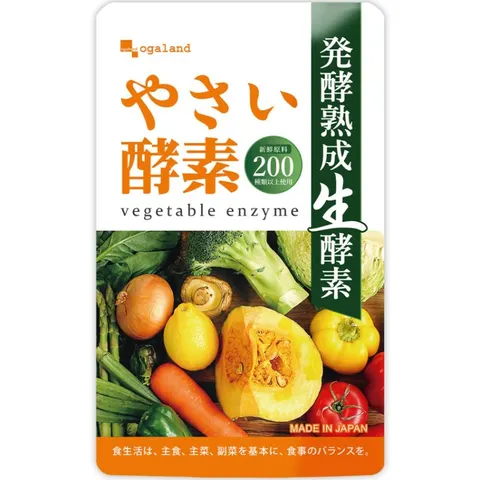
- Ogaland Plant-Based Enzyme Supplement, brand Ogaland: a fermentation extract of more than 200 kinds of plants per the maker, with added flaxseed and perilla oil as omega-3 sources; priced from 1,440 yen.
- Minami Healthy Foods Fermented Vegetables with Enzymes and Probiotics, brand Minami Healthy Foods: a fermentation extract of 245 kinds of vegetables, fruits, seaweed and mushrooms, with heat-treated lactic acid bacteria at 40 billion CFU per 2 capsules per the maker; priced from 2,630 yen.
- Metabolic Yeast x Enzyme Diet, 60 tablets, brand Metabolic: a fermentation extract of more than 200 kinds of herbs and plants with a yeast peptide and candle bush extract per the maker; priced from 1,370 yen.
For the wider range of Japanese supplements, including minerals and collagen, see the minerals and vitamins and collagen sections of the Eurasia Japan catalog, the Infinity brand page, and the Ogaland brand page.
Frequently asked questions
Is "kouso" the same thing as a Western "enzyme" supplement? No. The word translates as "enzyme," but kouso products are primarily fermented plant concentrates, not purified digestive enzymes with a measurable activity rating.
Can a kouso supplement be combined with probiotics? Yes, they are technically different categories. But if the kouso formula already contains lactic acid bacteria, check the combined daily bacteria count so you are not doubling up.
How do I know how long a pack will actually last? Check the "usage" section on the specific product's label, not the name: pack sizes within one line (90, 200, 360 capsules) can carry different daily amounts and different day counts.
Do these products contain added sugar or other ingredients to watch for? Some formats, especially drinkable sachets, contain sweeteners, preservatives and coloring. This is listed in the full ingredient list on each product page.
Can these supplements be shipped to my country? Shipping is sent directly from Tokyo with tracking. Delivery terms and minimum order amounts depend on the destination country; see the Eurasia Japan delivery page.
This article is for information only and is not medical advice. If you have a medical condition, are pregnant or take medication, consult a doctor before taking supplements.
This article is for information only and is not medical advice. Consult a doctor before taking supplements. Disclaimer & Health Notice
Products from this article
Infinity
3,100JPY
Cashback +155 JPY
Minami Healthy Foods
2,630JPY
Cashback +132 JPY
Catalog sections on this topic
Related articles
- Oligosaccharides and Fiber in Japanese Gut Supplements: GOS, Inulin and Dextrin
What galacto-oligosaccharides, inulin and isomaltodextrin actually do in Japanese gut supplements, how much is in one serving, and how to pair them with probiotics without doubling up.
- Salmon Cartilage Proteoglycan: The Japanese Ingredient Explained and Where to Find It
Salmon nasal cartilage proteoglycan is a Japanese joint-supplement ingredient often paired with collagen and chondroitin. Here is what it actually is and how much is in a daily serving.
- Japanese Supplements for Men Over 40: Joints, Gut, Omega-3 and Zinc
How Japanese brands build supplements for men over 40: glucosamine and chondroitin for joints, bifidobacteria for gut health, omega-3 and zinc. A guide to ingredients, daily servings and cost per day from the maker's own label.