Japanese Collagen Guide: Powder, Drink, Tablets or Jelly, and How to Take It
14 September 2026 · 8 min read
A practical guide to the four formats of Japanese collagen: powder, drinks, tablets and jelly sticks. How they differ in dose and cost per day, how to read a Japanese label, and how to take collagen as a course.
Japanese collagen comes in four main formats: powder, ready-to-drink liquid in small bottles, tablets or capsules, and jelly sticks. The format does not make a supplement stronger or weaker: it changes the serving size, the daily convenience and the cost of one day. In short: powder usually delivers the largest dose of collagen peptides at the lowest cost per day, drinks are the most convenient on the road, tablets are the easiest to dose and carry, and jelly sticks suit anyone who dislikes swallowing tablets. Below is a practical breakdown of each format, plus how to read a Japanese label and how to fit a collagen habit into a normal day.
What collagen actually means on a Japanese label
Japanese supplements almost always use hydrolyzed collagen, also called collagen peptides. Labels describe it as low molecular weight collagen (低分子コラーゲン). Hydrolysis breaks the protein into short fragments, which is why Japanese collagen powder dissolves quickly even in cold water instead of turning your glass into jelly.
The raw material varies. Marine (fish) collagen is the most common choice among Japanese makers, while porcine collagen appears in more budget-oriented lines. If you avoid fish or shellfish, check the ingredient list carefully, because beauty formulas often include additional marine-derived ingredients.
Vitamin C is nearly always listed next to collagen. That is standard practice for Japanese beauty formulas. Manufacturers also add hyaluronic acid, ceramides, elastin, placenta extract and botanical extracts. None of this replaces skincare or a reasonable diet.
Type II collagen is a separate story. It belongs to joint formulas rather than skin formulas, and the doses are completely different: tens of milligrams instead of thousands. Do not compare those products directly with beauty collagen, they are different categories.
The four formats and how they differ
Powder
The most generous format in terms of collagen per serving. A Japanese serving is typically 5-8 grams and contains 5,000 mg of peptides or more. Powders are usually close to flavorless, so people stir them into coffee, tea, soup, yogurt or smoothies.
Upsides: the most peptides per yen, flexible dosing, and large 30-60 day packs. Downsides: you need a scoop and a glass, which is less convenient while travelling. Heat is not a problem, so stirring powder into warm coffee or tea is fine.
Collagen drinks
Small 50 ml bottles, usually 10 per box. Each bottle is a ready serving: open and drink. Manufacturers tend to put their richest formulas into drink lines, adding ceramides, GABA, botanical extracts and proprietary complexes.
Upsides: nothing to mix, pleasant berry or citrus taste, easy to take with you. Downside: normally the highest cost per day, and the bulkiest packaging to ship.
Tablets and capsules
A daily serving is typically 4-6 tablets. The collagen dose is lower than in powder, often around 2,000 mg, but the format is completely neutral in taste and fits in any bag. Packs come in 20, 30 and 60 day sizes, and B vitamins plus vitamin C are frequently included.
Upsides: precise dosing, compact, ideal for a two-month course. Downside: if you dislike swallowing tablets, six a day will wear on you.
Jelly sticks
A stick weighs about 15 g, tastes of fruit, and usually carries around 3,000 mg of collagen. It is the compromise between powder and drinks: a ready serving, but smaller than a bottle and cheaper per day.
Upsides: no water needed, good for people who avoid tablets, easy to carry. Downside: packs usually cover 15-20 days, so a longer course means buying several.
How to read the serving size on a Japanese pack
Japanese packaging is consistent, and the numbers you need take about a minute to find:
- 1日あたり or 1日の目安量: the recommended daily serving, for example 6 tablets or 7.4 g of powder.
- コラーゲン ○○○○mg: how much collagen that serving contains.
- 内容量: net weight or piece count.
- 賞味期限: best-before date, written as year.month.day.
Then calculate the cost per day: divide the pack price by the number of days the maker states. That single step makes a 1,500 yen product and a 5,000 yen product comparable. Check what you get for that price too: 5,000 mg per serving and 2,000 mg per serving solve different problems even at a similar price.
How to take Japanese collagen
Manufacturers rarely impose strict rules, but a few guidelines hold up well:
- Stick to the stated serving. Taking more adds nothing, and the formula is balanced around the listed amount.
- Pick a fixed time of day. Many people take collagen in the evening simply because it is easier to remember. Tying it to dinner or to your evening skincare works as a reminder.
- Think in courses, not days. Japanese packs cover 20-60 days. It makes sense to judge a product after several consecutive packs rather than after a week.
- Do not stack three collagen products at once. Powder plus jelly plus tablets is redundant. Choose one main format and keep a second as a travel option if you like.
- Check the allergen line. Fish, gelatin, soy and dairy components are always listed separately on the pack.
Choosing a format for your routine
- You take supplements at home and want the most peptides per yen: powder.
- You travel often and need something compact: tablets or jelly sticks.
- You struggle with tablets: jelly or drinks.
- You want the richest multi-ingredient formula and accept a higher price: drinks.
- You are trying collagen for the first time: start with a small 20-30 day pack before committing to a large one.
What Eurasia Japan has in stock
Everything below is an original Japanese product in its retail packaging, shipped directly from Tokyo. The full range sits in the supplements and vitamins catalog.
- Asahi Perfect Asta Collagen Powder, 225 g (about 30 days), by Asahi, from 2010 yen. A powder that dissolves quickly without changing the taste of your drink. The maker states 5,300 mg of low molecular weight collagen per 7.4 g serving, plus hyaluronic acid, vitamin C and lactic acid bacteria.
- DHC Collagen Powder, by DHC, from 3100 yen. A soluble collagen peptide powder with 5,000 mg per serving and 50 mg of vitamin C, in a 192 g pack, made for mixing into drinks and dishes.
- Shiseido The Collagen Drink, by Shiseido The Collagen, from 3260 yen. Ten 50 ml bottles per pack, formulated with low molecular weight fish collagen, hyaluronic acid, ceramides, vitamin C and botanical extracts.
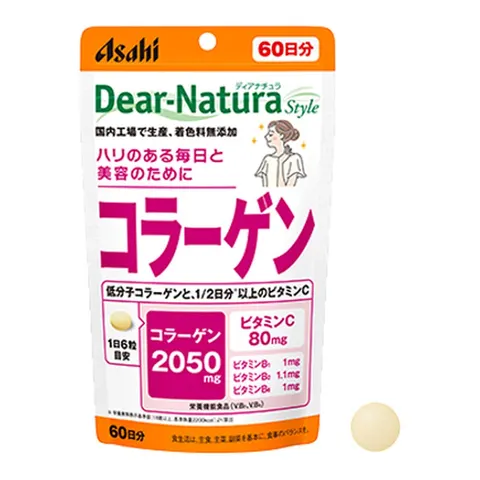
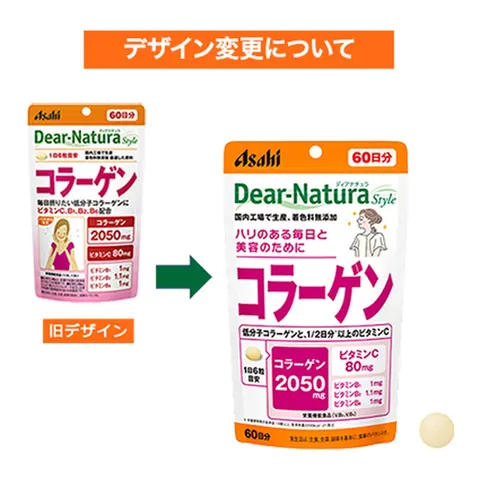
- Dear-Natura Collagen, 360 tablets (60 days), by Dear-Natura, from 3090 yen. A tablet format built for a long course: per the maker, the daily serving of 6 tablets provides 2,050 mg of collagen, along with vitamins C, B1, B2 and B6.
- DHC Collagen Jelly EX, by DHC, from 2510 yen. Fifteen 15 g jelly sticks per pack with 3,000 mg of collagen peptides per serving, plus hyaluronic acid, elastin peptides, ceramides and mangosteen extract. Mango flavor, 14 kcal per stick.
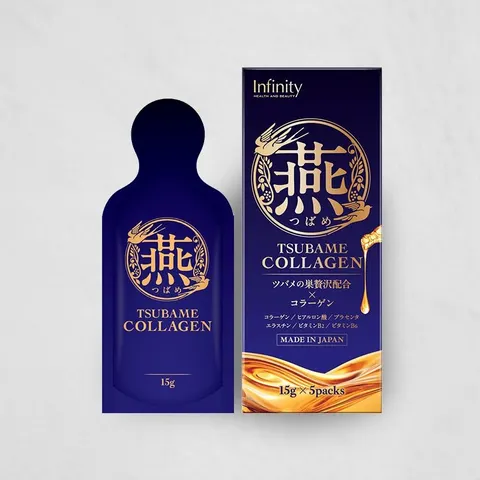
- Infinity Swallow's Nest Collagen, 5 sachets of 15 g, by Infinity, from 1420 yen. A drinkable beauty supplement with low molecular weight fish collagen and swallow's nest extract. A small pack, handy for testing the format.
Frequently asked questions
Which collagen format gives the best value? Usually powder: it carries more peptides per serving at a lower cost per day. Drinks are almost always more expensive per day but win on convenience.
Can I stir collagen powder into hot coffee? Yes. Collagen peptides tolerate the temperature of a hot drink, and most Japanese powders are specifically made to dissolve fast and taste neutral.
How long should a course last? Japanese packs are sized for 20-60 days, and makers generally suggest taking the product consistently across several packs. Nobody promises a specific timeline.
How does skin collagen differ from joint collagen? By type and dose. Beauty formulas use hydrolyzed type I and III collagen in gram quantities, while joint formulas usually rely on type II collagen at tens of milligrams, combined with glucosamine and chondroitin.
How does shipping work? Shipping from Tokyo, normally 3-10 business days before dispatch, then EMS 5-14 days in transit, with tracking. The minimum order for goods is 22,000 yen, and payment is by card through Stripe.
This article is for information only and is not medical advice. Consult a doctor before taking supplements.
This article is for information only and is not medical advice. Consult a doctor before taking supplements. Disclaimer & Health Notice
Products from this article

Dear-Natura
3,090JPY
Cashback +155 JPY
Related articles
- Shiseido The Collagen vs DHC vs Orihiro: Japanese Collagens Compared by Formula and Price
A practical comparison of three popular Japanese collagen brands by formula, format and cost per course, plus a simple method for working out the real price per day.
- How to Choose Japanese Vitamins by Age: 30s, 40s, 50s and 60+
How the sensible choice of Japanese supplements shifts in your 30s, 40s, 50s and 60s: base multivitamins, iron, collagen, equol and isoflavones, calcium with vitamin D, and glucosamine for joints.