Japanese Kitchen Tools: Vegetable Peeler, Mandoline Slicer and Kitchen Sponge, How to Choose
4 November 2026 · 7 min read
Beyond knives, a Japanese kitchen relies on a good peeler, a mandoline slicer and the right sponge. Here is how blade shape, thickness adjustment and materials affect the choice.
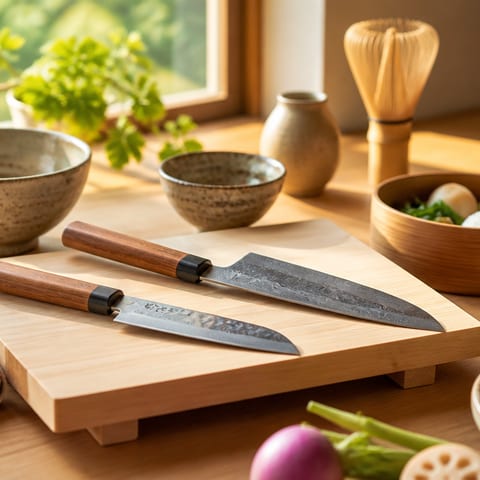
A good knife handles half the work in a Japanese kitchen, but daily prep and cleanup usually come down to three less obvious tools: a vegetable peeler, a mandoline slicer for even cuts, and the right dish sponge. In Japan these get the same careful attention as knives: blade shape, material, how the tool feels in the hand over a long session, and how to care for it afterward. Here is what to look at when choosing each of the three.
Vegetable Peeler: Straight or Curved Blade
The main difference between peeler designs is whether the blade is straight or curved. A straight blade is the universal, familiar choice: it works on produce of any shape but needs more passes on round items. A curved blade follows the shape of round produce (potatoes, apples, cucumbers) and stays in closer contact with the surface as it moves, so peeling rounder items goes faster and more evenly.
Japanese peeler blades are usually stainless steel, which resists rust with normal care and holds a working edge long enough for everyday home use. For curved-blade models, the maker often states the maximum diameter the tool is designed for, for example up to 70 mm, and it is within that range that the curved shape gives its speed advantage over a straight blade.
If a kitchen regularly peels a lot of round vegetables and fruit, a curved blade is usually the more comfortable choice. If you want one tool that handles many shapes, including long or irregular produce, a straight blade stays the more flexible option.
Mandoline Slicer: Thickness, Blades and Safety
A mandoline solves a problem a knife handles more slowly and less consistently: cutting a large volume of vegetables to an even thickness. The key spec is the thickness adjustment: Japanese mandolines typically set this with a dial or ring marked in increments, usually ranging from a fraction of a millimeter up to several millimeters. For very thin cuts, such as daikon for garnishes, some models add a separate vertical adjustment of the slicing board, which improves precision at the thinnest settings.
The width of the slicing board determines what size vegetables are comfortable to cut: a wider board suits larger root vegetables, while a narrower one is more compact to store. Many mandolines have a non-slip base or shape that sits securely on a cutting board or directly over a bowl.
Safety is worth a separate note. A mandoline blade is sharp and works at a fixed, close distance from the hands, so it is worth using the finger guard that comes with the slicer or is sold separately, especially when slicing the last small piece of a vegetable. After use, wash the blade right away and by hand, rather than leaving it in the sink with other dishes.
Dish Sponge: Materials and Shape
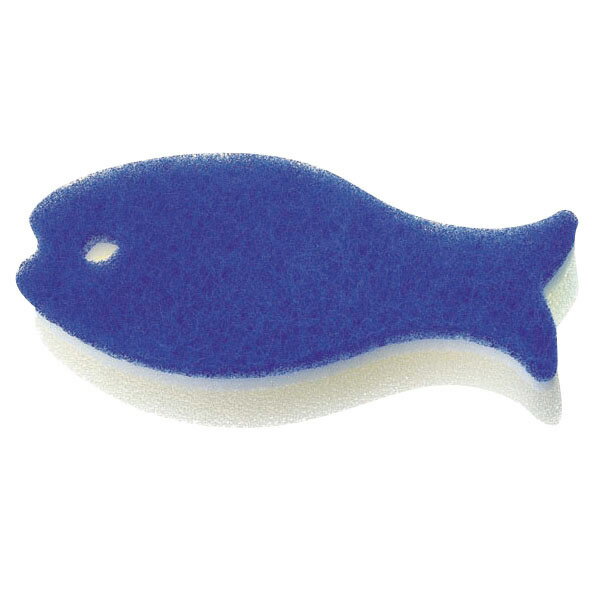
A sponge looks like the simplest of the three items, but there is still something to consider. Multilayer sponges combine a polyurethane foam layer with an outer nonwoven fabric layer: this combination produces thick, abundant lather while staying gentle on most dish surfaces. Lather matters not just for comfort but because it reduces how much you need to scrub, which is gentler on nonstick coatings in particular.
The sponge's shape affects how easily it reaches tight spots: the bottom of a glass, the inside of a narrow mug, the gaps between fork tines. Some sponges are designed so the working end can be twisted or squeezed narrower to get into those tight spaces without losing its main shape for washing larger plates.
Manufacturers generally do not give an exact lifespan for a sponge, since it depends heavily on how often it is used and on water hardness. A practical rule of thumb: replace it once it loses its shape, lathers less than before, or keeps a smell even after rinsing and drying.
Matching the Tools to Your Kitchen
If you cook a lot of vegetable-heavy dishes, such as salads, pickled sides, or recipes built around daikon and carrot, a curved peeler for round produce paired with a mandoline for even thin slicing takes the repetitive prep work off your knife. If versatility matters more and the volume of cooking is smaller, a straight-blade peeler and a compact mandoline with basic thickness adjustment will be more practical.
Choose a sponge based on what you clean most: cookware with a nonstick coating calls for soft lather without abrasive texture, while heavily soiled oven dishes are easier with a denser sponge shape that can reach into corners.
Care and Storage
A stainless steel peeler just needs washing and drying after use, without being left wet for long, to keep stains off the edge. A mandoline blade should be hand washed right after slicing, not soaked with other dishes, and stored so the exposed edge cannot be brushed against by accident. A sponge should be rinsed free of soap residue after use and allowed to dry between uses, which extends how long it stays effective and cuts down on odor.
What's in the Eurasia Japan Catalog
All three tools covered in this guide are available in the Eurasia Japan catalog:
- Shimomura Kihan Sugokire Kaisoku Peeler: a stainless steel peeler with a curved blade for quickly peeling round vegetables and fruit, from 1,850 yen.
- Benriner Super Benriner No.95: a mandoline slicer with adjustable slice thickness and a 95 mm wide slicing board, from 6,220 yen.
- MARNA Fish-Shaped Kitchen Sponge: a three-layer sponge combining foam with a nonwoven outer layer, from 380 yen.
Benriner specializes specifically in slicers and mandolines for home and professional kitchens, and Shimomura Kihan carries other stainless steel kitchen tools as well. If you also need a knife alongside these tools, the Japanese knife guides live in the same catalog section.
Frequently Asked Questions
Can a mandoline slice firm vegetables like potatoes or carrots? Yes, the thickness adjustment works for both softer and firmer vegetables. When slicing down to a small last piece, use the finger guard so your hand stays away from the blade.
Does a curved-blade peeler work on elongated vegetables like zucchini or cucumbers? Yes, but the speed advantage over a straight blade is stated by the maker for produce up to about 70 mm in diameter, so the effect is most noticeable on compact, rounder shapes rather than long vegetables.
How often should a dish sponge be replaced? There is no fixed number from the manufacturer. Watch the sponge itself: once it loses its shape, lathers less than it used to, or stops drying out fully between uses, it is time to replace it.
Does this guide cover knives as well? No, this article covers only the peeler, mandoline and sponge. Japanese kitchen knives are covered in separate guides, and the knives themselves can be found in the kitchen category.
How is shipping handled for these items? All orders ship directly from Tokyo with tracking. Orders typically leave within 3-10 business days after payment, and EMS delivery to the recipient takes another 5-14 days in transit. The minimum order amount for goods is 22,000 yen, and payment is by card through Stripe.
Products from this article
Shimomura Kihan
1,850JPY
Cashback +93 JPY
Benriner
6,220JPY
Cashback +311 JPY

Catalog sections on this topic
Related articles
- Japanese Fish and Sashimi Knives: Deba, Yanagiba and Sujihiki, How to Choose
Deba, yanagiba and sujihiki each solve a different kitchen task: filleting fish, slicing sashimi, or cutting meat and fish into thin even slices. Here is how the three differ and how to pick one by steel and edge type.
- Japanese Kitchen Knives: Gyuto, Santoku, Petty and Nakiri, VG10 vs Aogami vs Shirogami Steel, How to Choose and Care
How Japanese knife shapes (gyuto, santoku, petty, nakiri, yanagiba) differ, what VG10, Aogami and Shirogami steels mean in practice, plus hardness, bevels and care, with knives available from Eurasia Japan.