Japanese Fish and Sashimi Knives: Deba, Yanagiba and Sujihiki, How to Choose
2 November 2026 · 8 min read
Deba, yanagiba and sujihiki each solve a different kitchen task: filleting fish, slicing sashimi, or cutting meat and fish into thin even slices. Here is how the three differ and how to pick one by steel and edge type.
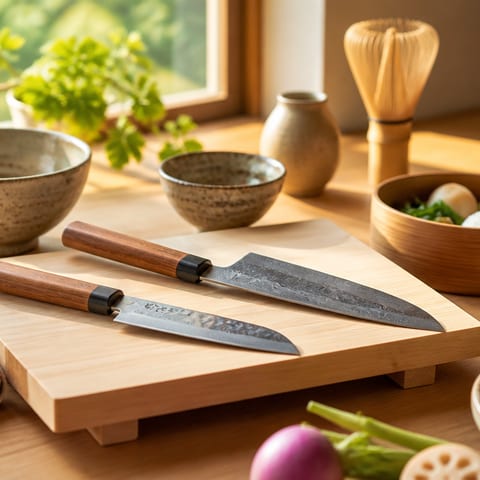
Three knives, three different jobs
Japanese cooking works with fish far more often than most Western kitchens, and Japanese knifemakers built a separate knife for each stage of handling it. The short answer to "which one do I need" is this: a deba is for breaking down a whole fish (filleting, removing the head, cutting through small bones), a yanagiba is for slicing finished fillets into sashimi and nigiri, and a sujihiki is a general-purpose long slicer for cutting meat and boneless fish into thin, even slices. If you cook whole fish at home, start with a deba. If you buy ready fillets and want to slice them the way a sushi counter does, get a yanagiba. If you want one long knife for both meat and fish without the bone-cutting duty, a sujihiki fits.
All three differ from a familiar Western chef's knife or a santoku not just in shape but in how they are ground: deba and yanagiba are almost always single bevel, while sujihiki, like gyuto, is double bevel. That is not tradition for its own sake, it follows directly from the job each knife does.
Deba: the knife for breaking down fish
Deba is a thick, heavy knife with a wedge shaped cross section. The heel is thick and strong enough to take impact against the spine and bones of a fish, while the tip is thin and sharp enough to work cleanly along the backbone. The single bevel edge, usually ground for right handed use, produces a very thin cutting edge on one side and a sturdy back bevel on the other that keeps the blade tracking straight through the cut.
A deba is used to:
- remove the head and fins;
- fillet along the spine;
- cut through small bones (large bones call for heavier, more specialized knives);
- break down poultry at the joints.
A traditional deba is forged from carbon steel such as Shirogami (White Paper steel), which holds an extremely sharp edge at roughly HRC 60-61 but rusts quickly without care, so the blade needs to be wiped dry immediately after use and stored without any moisture left on it. Stainless steel versions are more forgiving day to day, though they are traditionally considered slightly less keen than carbon steel at the same hardness.
Yanagiba: the knife for sashimi and nigiri
Yanagiba means "willow leaf," and the blade really does resemble a narrow, long leaf: a thin, straight edge running anywhere from 210 mm up to 300 mm or more. A yanagiba has one job, slicing an already filleted piece of fish into clean slices for sashimi or nigiri in a single smooth drawing stroke, rather than a sawing back and forth motion that tears the fish's fibers and ruins the texture.
The single bevel edge, again usually ground for right handed use, lets the blade cut with minimal friction and without deforming a thin piece of fish. The longer the blade, the fewer strokes a single slice needs and the cleaner the cut face comes out, which is why professional sashimi knives often run past 270 mm.
Yanagiba are made in both traditional carbon steel such as Shirogami and in modern stainless steel, for example Damascus-clad VG10: the stainless version is typically harder (around HRC 60-62), resists rust and is easier to maintain day to day, which suits a home kitchen that does not prepare raw fish every day.
Sujihiki: the general-purpose slicer
A sujihiki looks similar to a yanagiba but is ground with a double bevel like a Western knife, so it works equally well for right and left handed cooks. It is not built for one specific technique but is a long, narrow slicer for cutting meat, boneless fish, and cooked poultry into thin, even slices. A sujihiki is not meant for breaking down a whole fish or cutting through bone, that job belongs to a deba.
Because of its double bevel, a sujihiki is easier to pick up than the single bevel deba or yanagiba, which is why it often becomes the first "specialist" Japanese knife added to a home kitchen that already has a gyuto or santoku for everyday work. You will find both carbon steel versions, sharper but needing to be dried immediately after use, and all stainless one piece models that are easy to wash and can even be rinsed in boiling water to sanitize, which suits kitchens where hygiene matters.
Steel and edge type: what to look at when choosing
- Carbon steel (Shirogami, Aogami). The traditional choice for deba and yanagiba. Holds an extremely sharp edge, typically hardness HRC 60-61. The trade-off: it rusts without care, so the blade needs to be wiped dry after every use and never left wet.
- Stainless steel (VG10 and similar). Usually slightly harder, around HRC 60-62, and resistant to rust. A bit more forgiving to maintain, suited to anyone who does not prepare fish every day and does not want to watch the knife constantly.
- Single bevel. The standard for deba and yanagiba, usually ground for right handed use. Gives the cleanest cut for its specific job but takes some getting used to and needs sharpening on the correct single side.
- Double bevel. The standard for sujihiki (as well as familiar gyuto and santoku shapes). Works for both right and left handed cooks and is simpler to sharpen.
Caring for a Japanese fish knife
Whatever the steel, a fish knife should be washed and dried right after use rather than left in the sink. This matters even more for carbon steel, since contact with water and the salt in fish speeds up corrosion. Store the knife in a wooden block, on a magnetic strip, or in a saya sheath rather than loose in a drawer with other knives, where a thin single bevel edge is easy to chip. These knives are best sharpened on a water stone that preserves the original bevel angle, especially for single bevel deba and yanagiba.
What is in the Eurasia Japan catalog
The catalog carries fish and sashimi knives from several Japanese makers, ranging from affordable all stainless models to traditional forged carbon steel blades:
- Kai Seki Magoroku Kinju ST Deba Knife 150 mm: stainless steel, edge wet ground on a fine whetstone, from 7430 yen.
- Kai Seki Magoroku Kinju ST Sashimi Knife (Yanagiba) 210 mm: single bevel edge for a clean sashimi cut, from 7430 yen.
- Kai Seki Magoroku Sujihiki Slicing Knife 240 mm, All Stainless: a seamless one piece blade and handle that is easy to wash, from 12700 yen.
- Iseya Yanagiba (Sashimi Knife) 210 mm, VG10 steel, Damascus: a stainless take on the traditional sashimi knife, from 23760 yen.
- Sakai Takayuki Kasumi-togi Deba 165 mm, Shirogami steel: traditionally forged carbon steel from the Sakai bladesmithing town, from 43200 yen.
- Sakai Takayuki Kasumi Yanagiba 300 mm, Shirogami steel: a long blade built for professional sashimi slicing, from 44400 yen.
For more options, including santoku, gyuto and nakiri, see the kitchen knives category, and browse workshop specific models on the Sakai Takayuki brand page and the Kai brand page.
FAQ
Can one knife replace a deba, a yanagiba and a sujihiki? If you rarely cook fish and buy pre-cut fillets, a double bevel sujihiki covers most slicing needs. For breaking down a whole fish, skipping the deba is awkward, since it is the only one of the three built to meet bone.
Can a deba handle a large fish, like tuna? For very large fish and thick bones, Japanese cooks reach for heavier, specialized knives. A home deba is sized for mid-sized fish such as sea bream, mackerel or a smaller salmon.
Can a left handed cook use a right handed yanagiba? Yes, but the cut will be less clean, since the bevel is ground for a right hand. Some makers offer left handed versions on request, but they are uncommon in retail lineups.
Does a sashimi knife need different sharpening than a regular kitchen knife? Yes. Single bevel knives need sharpening that preserves the original bevel angle and are usually sharpened on water stones rather than mechanical sharpeners built for double bevel blades.
Do these knives ship to every country? Knives do not ship to every destination, availability depends on the country, so check at checkout. Orders ship from Tokyo, usually 3-10 business days before dispatch, then EMS transit of 5-14 days.
Products from this article
Sakai Takayuki
43,200JPY
Cashback +2,160 JPY
Sakai Takayuki
44,400JPY
Cashback +2,220 JPY
Catalog sections on this topic
Related articles
- Japanese Kitchen Knives: Gyuto, Santoku, Petty and Nakiri, VG10 vs Aogami vs Shirogami Steel, How to Choose and Care
How Japanese knife shapes (gyuto, santoku, petty, nakiri, yanagiba) differ, what VG10, Aogami and Shirogami steels mean in practice, plus hardness, bevels and care, with knives available from Eurasia Japan.