Instant Matcha and Japanese Tea to Go: Sticks, Powder and Tea Bags, How to Choose and Brew
1 November 2026 · 6 min read
Japanese instant matcha and tea in sticks, powder and tea bags explained: how each format works, how to prepare it, and how it differs from brewing loose leaf tea.
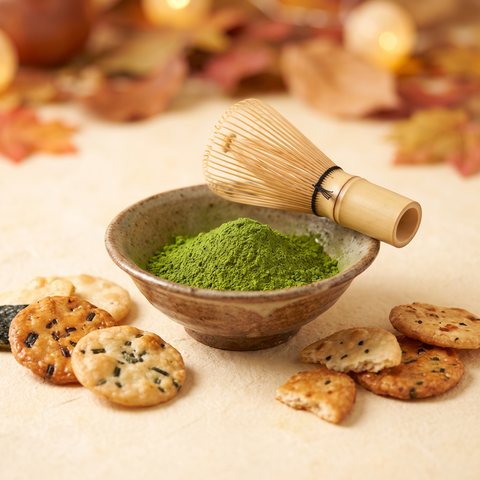
Instant Matcha and Japanese Tea to Go: What These Formats Are
Alongside traditional loose leaf tea, Japan has long sold formats built for speed: tea bags blended with matcha, instant green tea powder, pure matcha powder for everyday use, single-serving matcha sticks, and matcha latte powder. None of these replace brewing in a teapot or whisking matcha the ceremonial way with a chasen whisk. They solve a different problem: a cup of tea in under a minute, with no special equipment. Here is how the main formats differ and how to use each one.
Tea Bags: The Familiar Format, Blended With Matcha
Triangular or flat tea bags remain the most recognizable format. Inside is usually sencha or genmaicha (green tea with roasted rice), blended with matcha for a richer color and flavor. Steep one bag in hot water for one to two minutes and you get a result close to tea brewed in a pot, without needing a strainer. Tea bags work well at the office, while traveling, or whenever you only need one or two cups quickly.
Instant Green Tea Powder: Dissolves Rather Than Steeps
A separate category is instant green tea powder blended with matcha. Unlike a tea bag, it does not steep, it fully dissolves in water, hot or cold. This powder is made from roasted and finely milled tea leaves, so the flavor profile differs somewhat from a classic brew, but the result is faster and leaves nothing to discard afterward. It suits iced tea in summer and any situation where all you have on hand is a cup and a water bottle.
Pure Matcha Powder: For Tea and for the Kitchen
Pure matcha, powdered whole tea leaves, can be used two ways. The traditional way is whisking it with hot water into a froth, the way it is prepared for a tea ceremony. The other way is stirring it into milk, yogurt, smoothies, or desserts, where it works more as an ingredient than as a brewed drink. Manufacturers often note on the package that the powder is low in calories and sugar-free, which makes it an easy addition to different dishes without extra sweetness.
Matcha Sticks: A Single Serving to Carry Along
Matcha packed into individual sticks, usually 2 grams per stick, solves a specific problem: how to bring matcha on a trip or to work without carrying a tin and a measuring scoop. One stick is one serving measured out in advance, so there is no need to weigh or eyeball the powder. All you need to prepare it is hot water and a whisk, and if a whisk is not at hand, the powder can be stirred into a small thermos of hot water, though the foam and texture will not match a properly whisked cup.
Matcha Latte Powder: A Ready-Made Solution for Milk
Matcha latte powder differs from pure matcha in composition: it already contains sugar and skimmed milk powder blended to the maker's recipe, so it is built specifically for making a latte rather than a ceremonial cup of tea. To prepare it, simply stir the powder into hot or cold milk with nothing else added. It is a convenient option when there is no suitable pure matcha on hand for a latte, or when figuring out the right ratio of sugar and milk is more trouble than it is worth.
How to Choose a Format for the Occasion
- For a quick cup during the day, tea bags or instant green tea powder both work well.
- For iced tea in summer, instant powder is the more practical choice since it dissolves in cold water too.
- If matcha is needed for cooking, baking, or smoothies, choose pure matcha powder with no added ingredients.
- For travel or the office, where opening a tin is inconvenient, single-serving matcha sticks are the practical pick.
- For a latte at home without calculating ratios, ready-made matcha latte powder is the simplest route.
- For the traditional whisked preparation, pure matcha and a separate chasen whisk are needed; a whisk is not included with any of these formats.
What's in the Eurasia Japan Catalog
The Eurasia Japan catalog carries several Japanese tea and matcha formats from Japanese makers:
- Gion Tsujiri Matcha sticks, 10 x 2 g, brand Gion Tsujiri, single-serving matcha for travel, from 2270 yen.
- Gion Tsujiri Matcha Latte powder, 180 g, brand Gion Tsujiri, for preparing a latte with milk, from 2050 yen.
- Itoen Oi Ocha instant green tea with matcha, 80 g, brand Itoen, dissolves in hot and cold water, from 1740 yen.
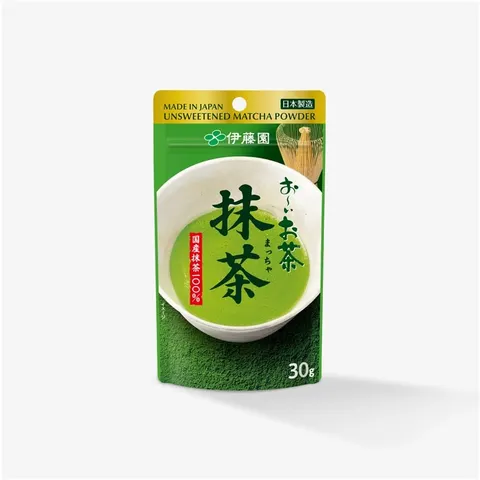
- Itoen Oi Ocha Matcha powder, 30 g, brand Itoen, pure sugar-free matcha for tea and cooking, from 1420 yen.
- Itoen Oi Ocha Premium genmaicha with Uji matcha, 50 tea bags, brand Itoen, the familiar tea bag format, from 2120 yen.
The full range of Japanese tea and snacks is on the food and drinks catalog page, and products from individual brands, such as Itoen and Gion Tsujiri, are collected on their brand pages.
Frequently Asked Questions
What is the difference between instant powder and pure matcha? Instant green tea powder is made specifically to dissolve quickly in water, including cold water. Pure matcha is traditionally whisked, but it can also be stirred into milk, yogurt, or desserts as an ingredient.
Can matcha sticks be prepared without a chasen whisk? Yes, the powder can be stirred in with a spoon in hot water or a thermos, but without whisking, the foam and texture will differ from the traditional preparation.
Can matcha latte powder be used for tea without milk? No, it already contains sugar and milk powder by the maker's recipe, so it is meant to be prepared with milk rather than steeped in water alone.
Can matcha latte powder or pure matcha be used for baking? Pure matcha with no additives is commonly used for both baking and drinks. Matcha latte powder, with its added sugar and milk, is better kept for lattes, since those additions would change the flavor of a baked dish.
How fast does tea ship from Tokyo? Orders ship from Tokyo, usually prepared for dispatch in 3-10 business days, with EMS delivery taking 5-14 days in transit.
Products from this article
Catalog sections on this topic
Related articles
- Japanese Aojiru: Young Barley Grass and Kale Green Juice Powder
What Japanese aojiru is, what it is made from, how it differs from green tea, and how to mix it. A look at young barley grass and kale green juice powders.
- Japanese Instant Noodles: Ramen, Udon and Yakisoba, How to Choose and Cook Them
Ramen, udon and yakisoba instant noodles differ in broth, noodle texture and cooking method. A practical guide to choosing and preparing each Japanese format.
- Japanese Snacks Guide: What to Try First
A practical guide to Japanese snacks and sweets: where to start, which formats count as classics, and how to choose between cookies, candy and jelly treats.